Summary
An EU Authorised Representative plays a critical role for medical device and in vitro diagnostic manufacturers established outside the European Union. Under the MDR and IVDR, the role extends beyond simply providing an EU contact point. The Authorised Representative supports regulatory compliance, represents the manufacturer before authorities, and can assume legal liability for defective devices when the manufacturer has not fulfilled its obligations.
The purpose of an MDR Authorised Representative or IVDR Authorised Representative is, in part, to ensure that a responsible party is established within the Union. This provides a point of contact for authorities and addresses legal uncertainty for individuals seeking compensation when a defective device causes harm. Compared with the earlier MDD framework, the MDR also expanded the Authorised Representative responsibilities, including the requirement to have a Person Responsible for Regulatory Compliance (PRRC).
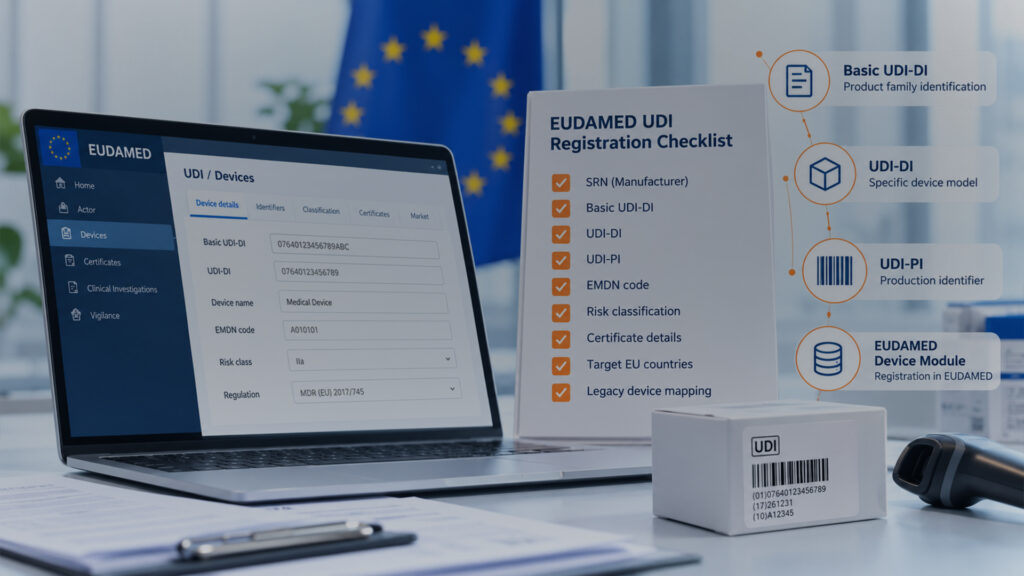
A written mandate is central to the relationship between the manufacturer and its representative. Under Article 11, the agreement needs to define the products covered and specify responsibilities such as access to technical documentation, verification of conformity assessment activities, representation before authorities, post-market feedback, and verification of the manufacturer’s EUDAMED registration. The mandate should also provide for termination when a manufacturer fails to meet its regulatory obligations.
The MDR and IVDR also establish requirements for identifying the representative on device labelling. The EU REP symbol is used alongside the representative’s contact details, and a manufacturer must appoint only one Authorised Representative per device. Manufacturers may nevertheless have different representatives for separate product lines.
Changing representatives also requires careful consideration. Responsibilities connected to the period of representation do not simply disappear when a new representative is appointed. The previous representative may need to retain technical documentation and continue forwarding relevant post-market information, making clear contractual arrangements important when a manufacturer changes representatives.
Another important requirement concerns the PRRC. An Authorised Representative must have a PRRC permanently and continuously available with the required expertise in EU medical device regulatory requirements. This requirement is separate from the manufacturer’s own PRRC obligation. MDCG 2022-16 provides additional clarification on the responsibilities and limitations surrounding the role.
The regulatory landscape also extends beyond the EU. The article examines the UK Responsible Person and Switzerland’s CH-REP requirements, highlighting how different frameworks create additional considerations for manufacturers seeking access to European markets.
Ultimately, the MDR and IVDR have increased both the responsibilities and potential liability of an EU Authorised Representative. Manufacturers should therefore assess a representative’s qualifications, regulatory experience, and PRRC arrangements carefully before entering into a mandate.
Read the original LinkedIn article: Role of the Authorised Representative to explore the role, responsibilities, and regulatory considerations surrounding an EU Authorised Representative.