Summary
Large Language Models (LLMs) are rapidly reshaping healthcare, supporting everything from administrative efficiency to clinical workflows. While their adoption continues to grow, one question repeatedly emerges within the European medical device industry: Should LLM-based healthcare applications automatically be considered medical devices?
The discussion has intensified following recent regulatory developments, including updates to MDCG 2019-11 Rev. 1 and increased attention from national competent authorities. Many healthcare professionals assume that if an LLM processes medical information or influences clinical workflows, it should fall under the Medical Device Regulation (MDR). However, the regulatory qualification of these technologies is more nuanced than it may initially appear.
Within the European Union, the defining criterion remains the specific medical intended purpose established by the manufacturer. Although LLMs may introduce risks such as hallucinations, automation bias, or inaccurate outputs, these risks alone do not determine whether a product qualifies as a medical device. Instead, manufacturers must clearly define the intended purpose of their product and assess whether it fulfils one or more of the specific medical purposes described under MDR 2017/745.
This distinction becomes particularly important as regulators continue refining guidance for Medical Device Software (MDSW). While recent updates to MDCG 2019-11 acknowledge that software processing or interpreting medical information may qualify as MDSW, the guidance consistently refers back to the need for a medical intended purpose. Generic LLM applications used for summarisation, transcription, or administrative support may therefore fall outside the scope of the MDR unless manufacturers explicitly claim diagnostic, therapeutic, or other medical functionality.
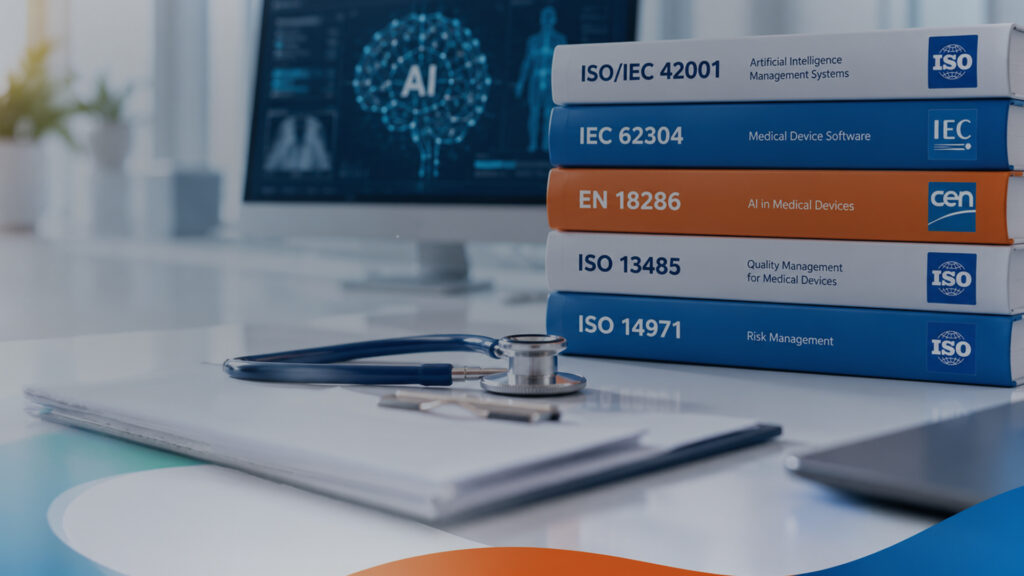
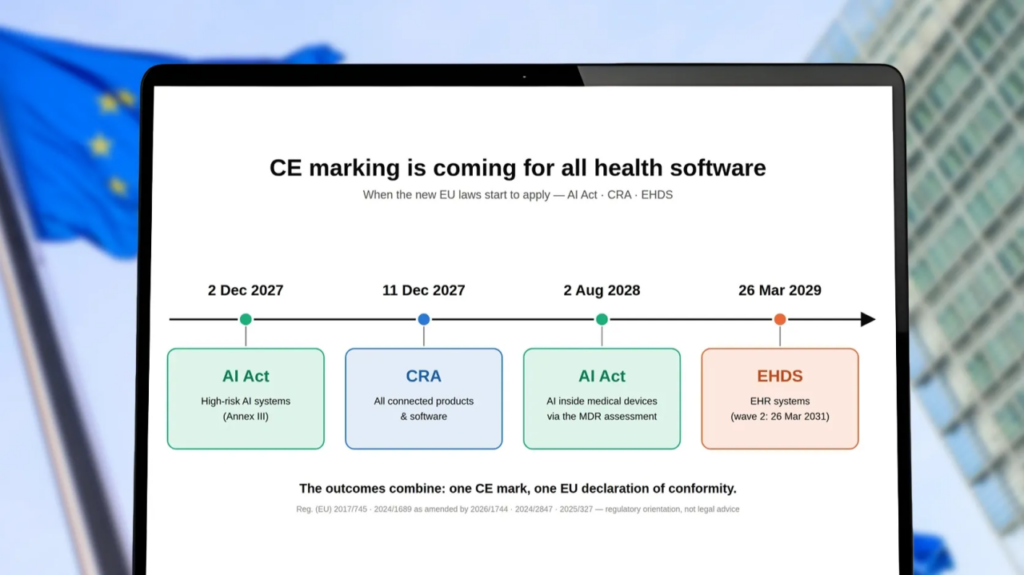
At the same time, providers should not interpret this as an absence of regulatory responsibility. LLM-based healthcare applications still introduce important considerations relating to patient safety, cybersecurity, information security, and data governance. Standards such as IEC 82304-1, IEC 81001-5-1, and ISO/IEC 27001, together with emerging legislation such as the European Health Data Space (EHDS), create additional obligations for many healthcare software providers, even where their products are not classified as medical devices.
As AI technologies continue to evolve, regulatory interpretations will undoubtedly evolve alongside them. For manufacturers developing or deploying LLM-based healthcare solutions, understanding the relationship between intended purpose, applicable legislation, and product claims is becoming increasingly important. A well-defined intended purpose not only supports regulatory qualification but also provides greater clarity for healthcare professionals using these technologies in practice.
Read the full article on Large Language Models (LLMs) in Healthcare: A European Perspective for a deeper analysis of how LLMs fit within the European regulatory landscape and what manufacturers should consider when determining whether an AI solution qualifies as a medical device.