Summary
The European Health Data Space (EHDS) Regulation represents a significant step towards creating a more connected and interoperable healthcare ecosystem across Europe. While much of the discussion has focused on improving access to electronic health data, the regulation has broader implications that manufacturers of Software as a Medical Device (SaMD), AI/ML-enabled medical devices, Electronic Health Record (EHR) systems, and other healthcare software should not overlook. As implementation progresses, understanding these new obligations will be essential for maintaining regulatory compliance and supporting future product development.
The EHDS has been introduced with three key objectives: empowering individuals to securely access and share their electronic health data across EU Member States, enabling the trusted reuse of health data for research, innovation, policy-making, and regulatory purposes, and fostering a harmonised European market for Electronic Health Record systems. Achieving these objectives depends on one critical principle – interoperability. Healthcare systems, medical devices, AI applications, and supporting technologies must be able to exchange electronic health records consistently, securely, and using standardised data formats.
Although the regulation establishes specific CE marking requirements for EHR systems, its scope extends beyond these products. Medical devices, in vitro diagnostic medical devices, AI systems, and wellness applications that claim interoperability with EHR systems are also expected to comply with the interoperability requirements defined within the regulation. This means manufacturers should begin evaluating how these essential requirements will be incorporated into their technical documentation, product design, and quality management processes as further implementing acts and common specifications become available.
Another important aspect of the EHDS is its focus on standardised health informatics and electronic health record exchange formats. While additional guidance is expected, organisations should already consider how future interoperability requirements may influence software architecture, cybersecurity, data management, and long-term regulatory strategies. Taking a proactive approach today can reduce future compliance challenges and support smoother integration with healthcare systems across Europe.
For developers of AI-enabled medical devices, the EHDS also creates new opportunities. By establishing a structured framework for accessing electronic health data for research and innovation, the regulation aims to support the responsible development, validation, and testing of AI systems while maintaining robust safeguards for privacy and data security. However, manufacturers should also understand the practical implications of health data access permits, secure processing environments, and evolving interoperability requirements that may affect product development throughout the lifecycle.
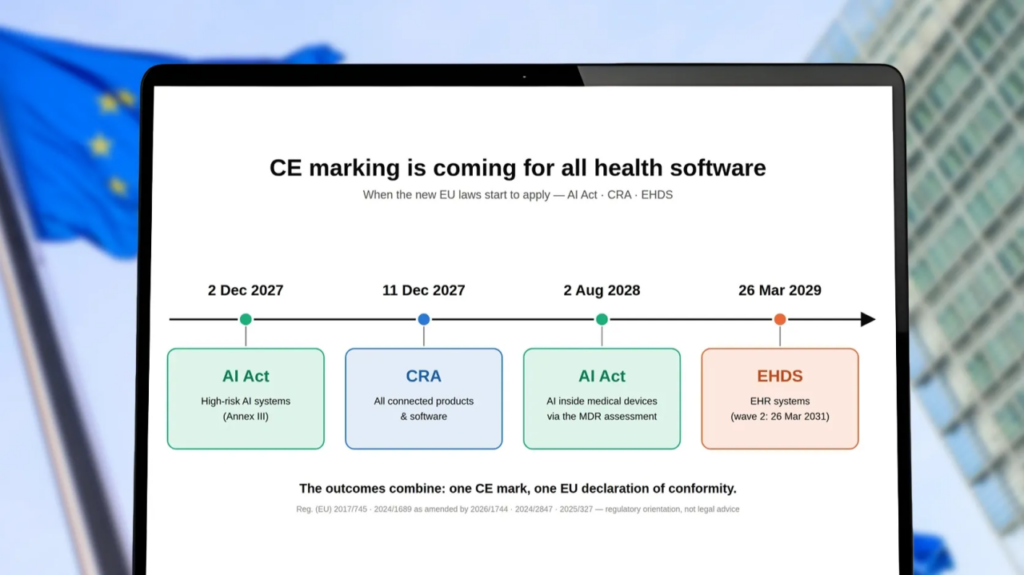
As the regulatory landscape continues to evolve, manufacturers should monitor the implementation timelines closely and prepare to align EHDS obligations with existing frameworks such as the EU MDR, IVDR, and the EU AI Act. Early preparation will help organisations strengthen compliance, improve interoperability, and position their healthcare technologies for long-term success in the European market.
For a deeper analysis of the EHDS Regulation, including its interoperability requirements, implementation timelines, and implications for SaMD and AI/ML-enabled medical devices, read the full article: Implications of the EHDS regulation for SaMDs and AI/ML-enabled medical devices.