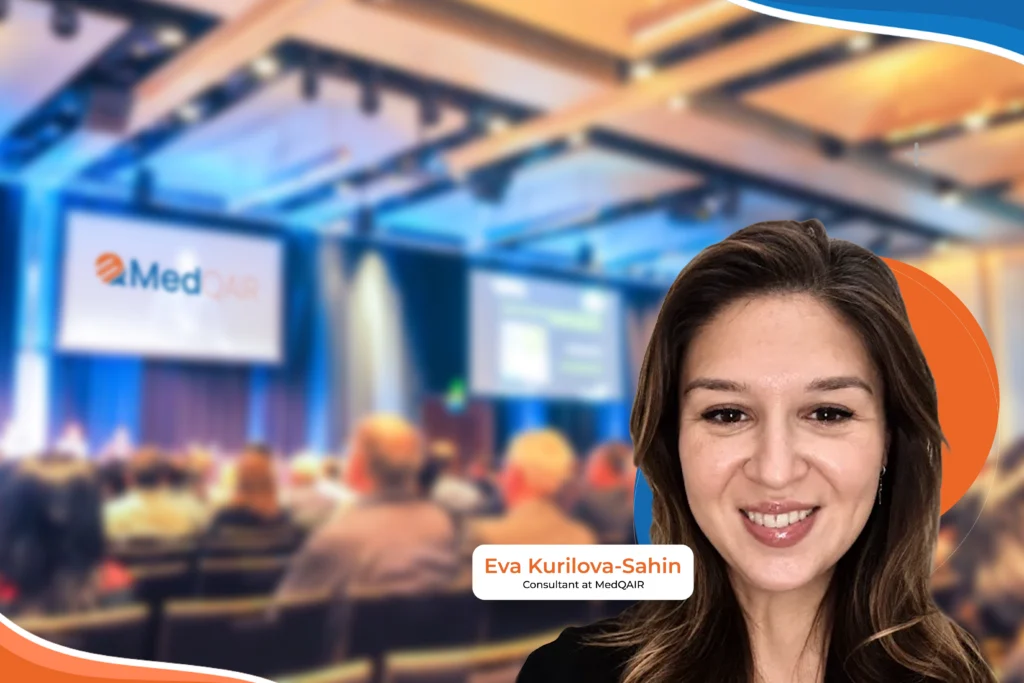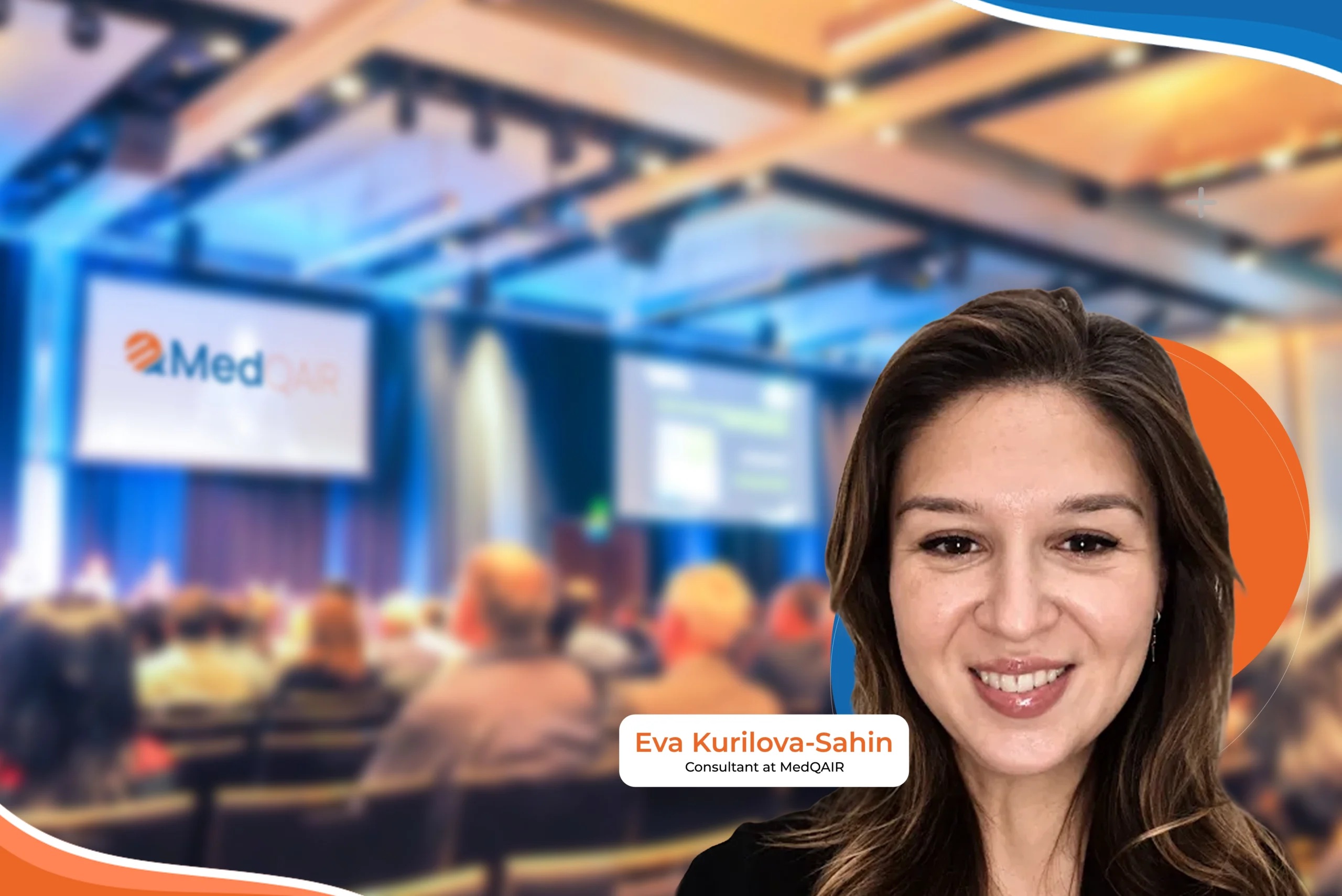
We are pleased to welcome Eva Kurilova-Sahin to the MedQAIR team.
Eva brings a background in medicine, clinical science, radiology, and oncology research, together with experience in AI-enabled medical technology. Over the past 10 years, her work has brought her close to the clinical, scientific, and product-related questions that accompany developing technologies intended for use in healthcare.
That experience is particularly relevant to MedQAIR’s work with manufacturers of software and AI/ML-enabled medical devices, where clinical evidence, intended purpose, validation strategy, and regulatory requirements need to remain closely connected throughout the product lifecycle.
We asked Eva about her move from medicine and clinical research into medical technology, what she has learned from working with AI-enabled healthcare products, and how clinical expertise can support stronger regulatory and product decisions.
1. You started your career in medicine and clinical research before moving into medical technology. How has that clinical background shaped the way you look at medical devices and AI-enabled healthcare products today?
I look at medical devices from a clinical perspective: what problem they address, who will use them, where they fit into the clinical workflow, and whether they deliver clinical benefit to patients or healthcare professionals. The main question I focus on is: does the device do the job it is supposed to do, and can it be used safely and effectively in clinical practice?
My clinical research journey started a decade ago when I had an opportunity to support the development of AI models in oncological imaging. This experience showed me how promising these technologies can be, and I was lucky to work with an exceptional team in a field that I found genuinely exciting.
What particularly attracts me to the medical device field is the pace of innovation, which is not that rigid, and the opportunity to move beyond research: to work with technologies that are already accessible in clinical practice, or to help new technologies enter the market and deliver meaningful benefits in clinical practice.
2. Your work has included clinical research in radiology and oncology as well as experience with AI-enabled medical imaging at DeepHealth (former Aidence). What have you learned about turning an AI technology into something that can be used safely and meaningfully in clinical practice?
Working with AI in academia and in the medical device industry has given me two very different perspectives. In academia, the focus was mainly on developing a high-performing model that addressed a clinical need, with the results contributing to scientific publications and further research. When I moved into the medical device field, I had to learn a lot about the regulatory requirements and understand how many different elements must come together for a product to be used successfully in clinical practice. I quickly learned that building an accurate AI model is only the starting point.
The MDR’s stronger emphasis on clinical evidence and post-market surveillance is one of the reasons I work in this field today, as it has created a greater need for professionals with clinical expertise. In that sense, my career path has also been shaped by the evolving needs of the medical device market.
3. Clinical evidence is a major part of bringing software and AI/ML-enabled medical devices to market. From your perspective, where should manufacturers involve clinical expertise earlier in product development, validation, and regulatory preparation?
I believe a successful product must solve a real problem, provide clear value, and be easy to use if healthcare organisations are expected to adopt it despite limited budgets, time, and resources. For a medical device primarily intended for clinicians, who are better placed than clinicians themselves to explain the challenges they face in their everyday work?
Clinicians can help define the problem, ensure the device fits existing workflows, identify limitations, and determine whether it will make their work better or more efficient. For AI-enabled devices, clinical input is also very important when developing and testing the models and when monitoring how the device performs in real clinical settings after it reaches the market.
My previous experience has shown me that involving clinicians early and throughout development helps teams address the right problem on time and create technology that works in practice; not simply something technically impressive that healthcare professionals may never use. Healthcare is understandably cautious, particularly when clinicians are expected to rely on AI systems whose reasoning may not be fully explainable. A successful product must therefore be designed around the needs of the people who will actually use it.
4. AI-enabled medical devices bring specific questions around clinical data, performance, patient populations, generalisability, and changes to the product over time. Which of these areas do you find particularly important when assessing whether the evidence behind a product is strong enough?
Clinical data quality, generalisability, and product changes are closely connected. Older publicly available datasets may no longer reflect current practice, particularly in areas such as medical imaging, where technology is constantly evolving. The relevance and quality of the data therefore matter more than its size. External validation using current, independent datasets from different patient groups, hospitals, and equipment is important for showing that a device can perform reliably in clinical practice and for supporting regulatory submissions.
Product updates must also be carefully assessed, even when they appear minor. For example, a measurement difference of only a few millimetres compared with the previous software version could cross a clinical decision threshold and affect patient management. The potential impact may be greater when a device is widely used or its outputs are difficult to verify.
Strong evidence must show that the device continues to work safely and reliably in real clinical practice.
5. What attracted you to MedQAIR, and which parts of your clinical and medical technology experience are you most looking forward to applying in your work with manufacturers?
I was attracted to MedQAIR and regulatory consultancy because of the opportunity to work with a diverse range of clients and products, to continuously learn, and to broaden my expertise beyond the clinical aspects of regulatory affairs. Before joining, I had also been following posts from the MedQAIR team members and found their insights into regulatory topics very relevant and useful.
What particularly appeals to me about regulatory work is its analytical nature. It requires critical thinking and good judgement because the field is complex, and the regulatory requirements are rarely straightforward. I also value the need to remain current in this rapidly evolving field. Supporting clients as they bring meaningful healthcare innovations into clinical practice makes the work both intellectually engaging and interesting
The Wrap
Eva’s experience across medicine, clinical research, and AI-enabled medical technology brings a strong clinical perspective to the MedQAIR team. We look forward to having her contribute that experience to our work with medical device manufacturers and healthcare technology companies.
If you’re developing medical software or an AI/ML-enabled medical device and need support with regulatory, quality, or clinical evidence requirements, get in touch with MedQAIR.