Summary
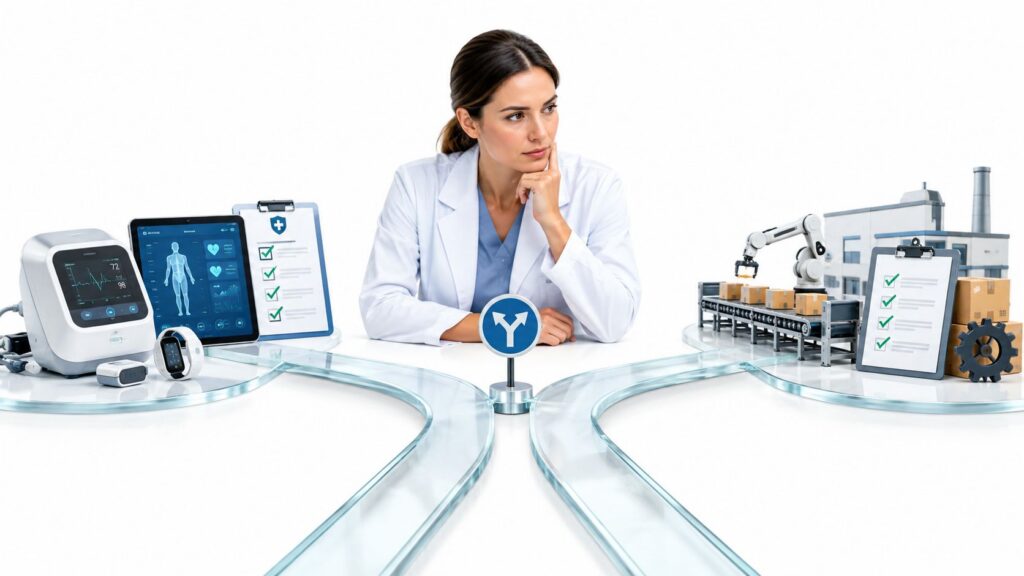
When the MDR and IVDR entered into force, Article 5(5) created a specific framework for medical devices developed and used within health institutions. The intention was relatively straightforward: allow hospitals and health institutions to develop in-house solutions for situations where no suitable commercial alternative exists, without forcing those products through a full CE marking process.
In practice, however, the framework came with strict limitations. Devices generally could not be transferred between legal entities, development had to remain within appropriate quality systems, and institutions needed to justify why equivalent commercial products could not meet the needs of the target patient group. While workable for smaller local solutions, the framework became far more restrictive once software and AI-enabled systems entered the picture.
That limitation becomes particularly visible for rare disease applications and specialised AI models. A single hospital may not have enough cases, data, or resources to meaningfully develop and validate an algorithm on its own. Collaboration between institutions becomes necessary, especially when dealing with edge cases, uncommon tumour types, or low-frequency conditions. Under the current structure, however, sharing those systems between hospitals creates legal and regulatory uncertainty.
Leon Doorn’s latest article examines how the proposed MDR and IVDR simplification package could significantly change that situation.
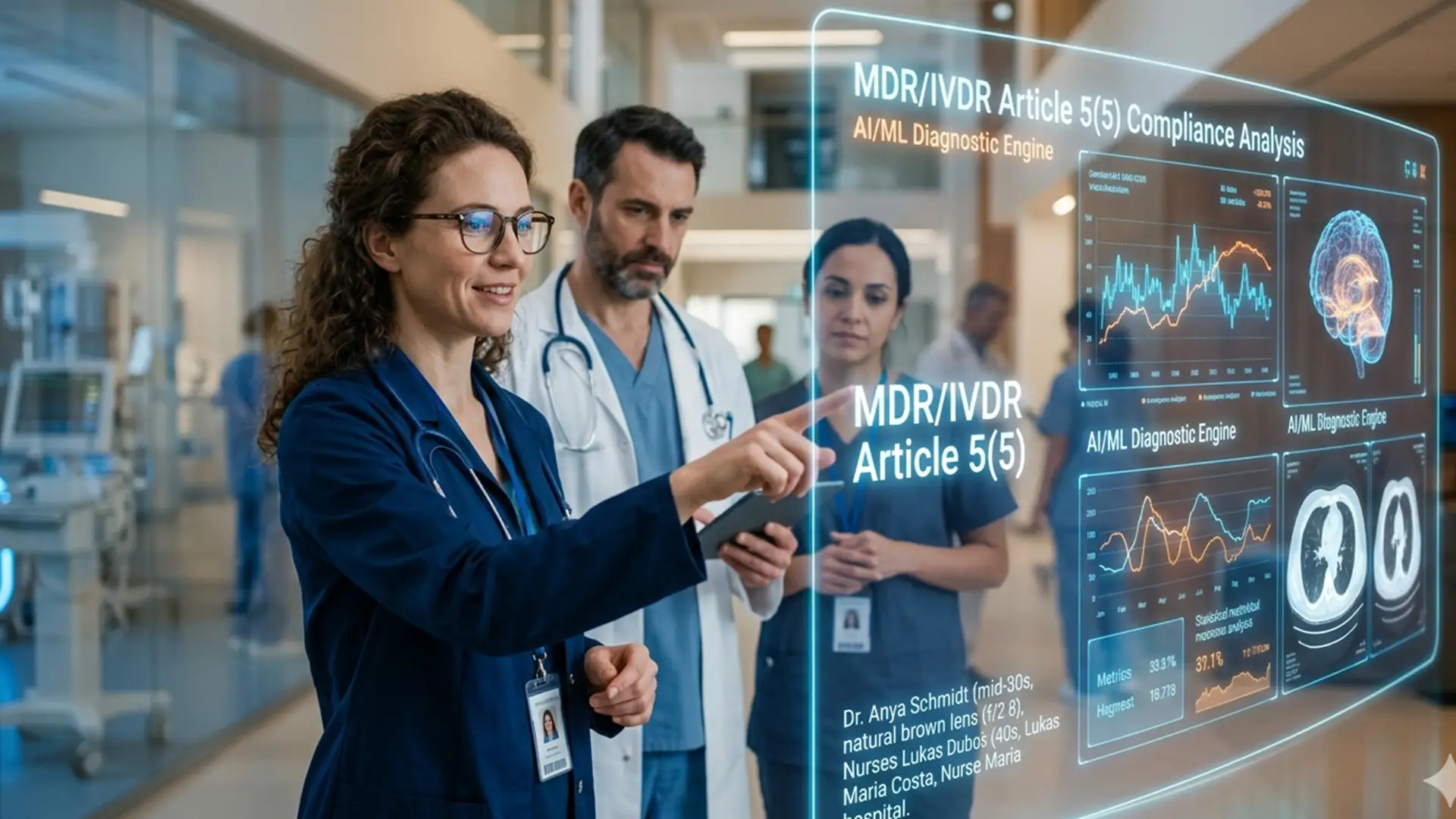
One of the most impactful proposed updates is the possibility to allow transfer of in-house developed medical devices between health institutions when justified in the interest of public health, patient safety, or public health emergencies. For AI/ML-enabled medical devices, this could fundamentally change how collaborative development takes place across hospitals and research networks.
The proposal also introduces a transition period of up to 10 years when a commercial alternative becomes available. That alone could materially change how hospitals approach long-term investment into internal software and AI solutions, particularly in areas where commercial markets remain limited or economically unattractive.
For IVDs, the proposed changes go even further. The current limitation requiring absence of commercial alternatives would effectively be removed for in-house developed IVD products, substantially broadening the scope for institutional development and use.
At the same time, the article makes clear that these opportunities introduce new complexities rather than removing oversight entirely. Data sharing across institutions would still require careful assessment under GDPR and EHDS requirements. Questions around governance, monitoring of AI drift, accountability between institutions, and interpretation of “industrial scale” manufacturing remain unresolved and may require further clarification over time.
What makes the article particularly interesting is that it does not treat Article 5(5) as a niche hospital exemption anymore. Instead, it frames it as a potentially important mechanism for collaborative AI and software development inside European healthcare systems, especially where commercial incentives remain weak.
For organisations working with AI-enabled medical software, digital pathology, rare disease diagnostics, or institutional software development, these proposed changes may become far more relevant than they initially appear.
Read the full article here:
Article 5(5) Redesigned: Sharing In-House Medical Software Across Hospitals.